
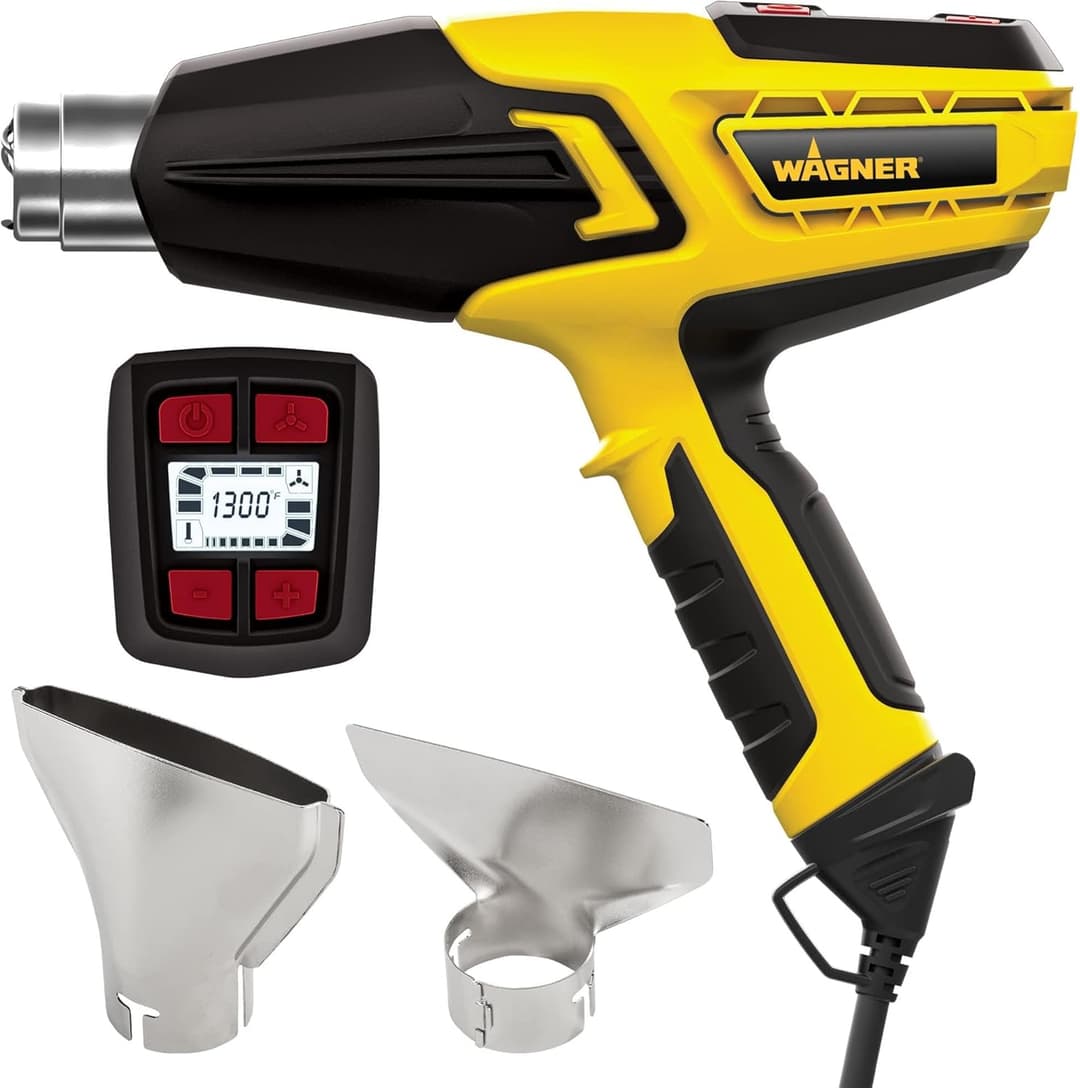
Buy this if
- You repeat the same project and want more predictable temperature settings.
- You work with mixed materials where small heat changes matter.
- You prefer visible controls over a basic dial.
Keep comparing if
- You only need occasional adhesive removal or simple shrink wrap.
- You want the lowest-cost tool for rough home projects.
Who this heat gun is best for
This pick is best for shoppers looking for: best digital temperature control. Compare the temperature range, airflow, power source, included nozzles, and safety instructions against the project before buying.
Setup tip: Write down the settings that work on scrap material so future projects start from a known baseline.
Key features
- LCD-style temperature controls
- Multiple fan speeds
- Memory setting behavior on many models
- Cool-down mode
- Integrated stand
Specs to verify
- Category
- Digital Corded
- Weight
- 1500W corded class
- Capacity / note
- Digital temperature control
Pros
- More precise than basic two-setting tools
- Useful for repeatable projects
- Good fit for paint and refinishing work
Cons
- Costs more than basic heat guns
- May be more tool than occasional users need
Quick answers before you click buy
Who should buy the Wagner Furno 700 Heat Gun?
It is a fit for shoppers looking for best digital temperature control, especially when the project matches digital heat gun with repeatable temperature control.
What should I verify before buying the Wagner Furno 700 Heat Gun?
Check the current temperature range, airflow, included accessories, warranty, return policy, seller details, and the manufacturer's safety instructions on the retailer page.
Is the Wagner Furno 700 Heat Gun safe for every heat gun project?
No heat gun is safe for every material or workspace. Use the lowest effective heat, keep the nozzle moving, ventilate when needed, and avoid flammable vapors, dust, paper, solvents, and unknown coatings.