
Buying Guide · July 28, 2026
Corded vs Cordless Heat Guns: Which Is Better?
Corded vs Cordless Heat Guns: Which Is Better?: a practical, evidence-aware guide with implementation steps, decision criteria, cautions, and a reusable chec...

Start here
Treat corded vs cordless heat guns: which is better? as a field procedure rather than a collection of tips. The procedure should still work when the day is busy, the easy option is unavailable, or another person takes over. Heat is useful only when temperature, distance, airflow, and dwell time are controlled together.[1][3][4][5]
This guide answers the decision implied by Corded vs Cordless Heat Guns: Which Is Better?. It shows what to verify, how to make a representative test, and how to recognize a limit before a confident recommendation becomes an avoidable problem.[1][3][4][5]
At a glance: the decision path
1. Define the two choices and the real scenario behind “Corded vs Cordless Heat Guns: Which Is Better?”.[1][3][4][5]
2. Translate the intended jobs into temperature, airflow, duty-cycle, and handling requirements, with special attention to corded.[1][3][4][5]
3. Screen cord, battery, wattage, controls, cooldown, and accessory compatibility, with special attention to cordless.[1][3][4][5]
4. Compare sustained usable output rather than relying on peak marketing numbers, with special attention to heat.[1][3][4][5]
5. Check current manual, warranty, service, and replacement-part information, with special attention to guns.[1][3][4][5]
6. Choose by scenario and document the tradeoff that remains.[1][3][4][5]
For Corded vs Cordless Heat Guns: Which Is Better?, start at checkpoint one even if a later checkpoint appears more interesting. This comparison, recommendation, tutorial, or explainer is useful only when the reader can see its evidence chain.[1][3][4][5]
What this article must help you decide
The practical question is not whether corded vs cordless heat guns: which is better? is a popular search. It is whether the idea fits a particular person, material, environment, business, photograph, food, child, or mobility need. Write the intended result and one unacceptable result before evaluating the options.[1][3][4][5]
The evidence packet for Corded vs Cordless Heat Guns: Which Is Better? is material identification, the tool manual, temperature observations, and a scrap-piece result. Some items will be controlling requirements; others will be preferences. Mark the difference. If a missing fact could reverse this decision or create scorching, gloss change, melting, smoke, odor, damaged wiring, or loss of adhesion, it must be resolved before the recommendation advances.[1][3][4][5]
A complete evidence-led walkthrough
Checkpoint 1: Define the two choices and the real scenario behind “Corded vs Cordless Heat Guns: Which Is Better?”.[1][3][4][5]
Practice this step on a small offcut or inconspicuous section: define the two choices and the real scenario behind “Corded vs Cordless Heat Guns: Which Is Better?”. Change one variable, keep the other conditions stable, and inspect the result before expanding the scope. A small test is useful only when it represents the difficult condition that the full workflow must handle. Apply this checkpoint to Corded vs Cordless Heat Guns: Which Is Better?, not to the topic cluster in the abstract.[1][3][4][5]
For Corded vs Cordless Heat Guns: Which Is Better?, save a short note containing material, nozzle, dial setting, distance, travel speed, surface response, and cooling time. That note is the evidence for checkpoint 1; completion without evidence is only an assumption.[1][3][4][5]
Checkpoint 2: Translate the intended jobs into temperature, airflow, duty-cycle, and handling requirements, with special attention to corded.[1][3][4][5]
Before performing this step, say the plan aloud: translate the intended jobs into temperature, airflow, duty-cycle, and handling requirements, with special attention to corded. Name the expected change, the maximum exposure or effort, and the stop signal. This short briefing matters because corded vs cordless heat guns: which is better? can drift when people improvise without noticing that the original conditions changed. Apply this checkpoint to Corded vs Cordless Heat Guns: Which Is Better?, not to the topic cluster in the abstract.[1][3][4][5]
For Corded vs Cordless Heat Guns: Which Is Better?, save a short note containing material, nozzle, dial setting, distance, travel speed, surface response, and cooling time. That note is the evidence for checkpoint 2; completion without evidence is only an assumption.[1][3][4][5]
Checkpoint 3: Screen cord, battery, wattage, controls, cooldown, and accessory compatibility, with special attention to cordless.[1][3][4][5]
Treat this as the handoff checkpoint: screen cord, battery, wattage, controls, cooldown, and accessory compatibility, with special attention to cordless. The person receiving the work should be able to state the result, the remaining risk, and the next review date. If the handoff requires hidden context, the corded vs cordless heat guns: which is better? instruction is not finished. Apply this checkpoint to Corded vs Cordless Heat Guns: Which Is Better?, not to the topic cluster in the abstract.[1][3][4][5]
For Corded vs Cordless Heat Guns: Which Is Better?, save a short note containing material, nozzle, dial setting, distance, travel speed, surface response, and cooling time. That note is the evidence for checkpoint 3; completion without evidence is only an assumption.[1][3][4][5]
Checkpoint 4: Compare sustained usable output rather than relying on peak marketing numbers, with special attention to heat.[1][3][4][5]
Do not treat “compare sustained usable output rather than relying on peak marketing numbers, with special attention to heat” as a box to tick. Explain what the step protects and what evidence will prove it worked. Capture material, nozzle, dial setting, distance, travel speed, surface response, and cooling time, then compare the observation with the stated result. Continue only when the evidence supports the next checkpoint. Apply this checkpoint to Corded vs Cordless Heat Guns: Which Is Better?, not to the topic cluster in the abstract.[1][3][4][5]
For Corded vs Cordless Heat Guns: Which Is Better?, save a short note containing material, nozzle, dial setting, distance, travel speed, surface response, and cooling time. That note is the evidence for checkpoint 4; completion without evidence is only an assumption.[1][3][4][5]
Checkpoint 5: Check current manual, warranty, service, and replacement-part information, with special attention to guns.[1][3][4][5]
Assign this action explicitly to the person operating the tool: check current manual, warranty, service, and replacement-part information, with special attention to guns. Give that person authority to stop the sequence when scorching, gloss change, melting, smoke, odor, damaged wiring, or loss of adhesion appears. Clear ownership prevents a common failure in corded vs cordless heat guns: which is better?: everyone sees the concern, but each person assumes someone else will make the decision. Apply this checkpoint to Corded vs Cordless Heat Guns: Which Is Better?, not to the topic cluster in the abstract.[1][3][4][5]
For Corded vs Cordless Heat Guns: Which Is Better?, save a short note containing material, nozzle, dial setting, distance, travel speed, surface response, and cooling time. That note is the evidence for checkpoint 5; completion without evidence is only an assumption.[1][3][4][5]
Checkpoint 6: Choose by scenario and document the tradeoff that remains.[1][3][4][5]
Ask what would make this action wrong in the present setting, then choose by scenario and document the tradeoff that remains. Compare the answer with material identification, the tool manual, temperature observations, and a scrap-piece result. This counter-check is especially valuable when a familiar method is being reused with a different person, product, location, or workload. Apply this checkpoint to Corded vs Cordless Heat Guns: Which Is Better?, not to the topic cluster in the abstract.[1][3][4][5]
For Corded vs Cordless Heat Guns: Which Is Better?, save a short note containing material, nozzle, dial setting, distance, travel speed, surface response, and cooling time. That note is the evidence for checkpoint 6; completion without evidence is only an assumption.[1][3][4][5]
A representative scenario to test
Write a short before-and-after scenario that another person can challenge. For corded vs cordless heat guns: which is better?, begin with define the two choices and the real scenario behind “Corded vs Cordless Heat Guns: Which Is Better?”. Then use a small offcut or inconspicuous section to see whether you can screen cord, battery, wattage, controls, cooldown, and accessory compatibility, with special attention to cordless. The attempt ends immediately if scorching, gloss change, melting, smoke, odor, damaged wiring, or loss of adhesion appears. A passing result must still show that the final checkpoint—choose by scenario and document the tradeoff that remains—is practical for normal use.[1][3][4][5]
Record the baseline before testing Corded vs Cordless Heat Guns: Which Is Better?. Make it observable and short enough to collect again. Do not improve the conditions merely to obtain a passing result; the purpose is to learn whether this advice survives its actual setting.[1][3][4][5]
Failure signals and recovery
Watch for these signals before additional effort makes recovery harder.[1][3][4][5]
• The article's promise is broader than the evidence available for corded vs cordless heat guns: which is better?.[1][3][4][5]
• The test avoids the real constraint described by heat gun buying guides.[1][3][4][5]
• The method continues after scorching, gloss change, melting, smoke, odor, damaged wiring, or loss of adhesion is observed.[1][3][4][5]
• The conclusion cannot be reconstructed from material, nozzle, dial setting, distance, travel speed, surface response, and cooling time.[1][3][4][5]
• No one has accepted ownership for choose by scenario and document the tradeoff that remains.[1][3][4][5]
When one of these Corded vs Cordless Heat Guns: Which Is Better? signals appears, stop the active step, protect the people and property involved, and preserve the evidence. Return to the earliest failed checkpoint. Change one variable or obtain the missing qualified guidance before another bounded test.[1][3][4][5]
Boundaries, cautions, and source checks
For this Corded vs Cordless Heat Guns: Which Is Better? review: Educational disclaimer: a heat gun can cause a burn, ignite a fire, damage wiring or finishes, and release hazardous fume or dust. Read the tool and material manufacturer instructions, use ventilation and suitable protective equipment, keep combustibles away, and stop when a coating, substrate, pipe, component, or repair method is uncertain. Older paint may contain lead; follow applicable EPA rules and use a qualified professional when required.[1][3][4][5]
Use these authoritative pages as starting points:[1][3][4][5]
• EPA lead-safe renovation guidance[1][3][4][5]
• OSHA respiratory protection guidance[1][3][4][5]
• CPSC extension-cord safety guidance[1][3][4][5]
For Corded vs Cordless Heat Guns: Which Is Better?, check each source's publication date, jurisdiction, model, audience, and scope. A general official page may establish the baseline while the relevant manufacturer, land manager, clinician, attorney, tax adviser, supplier, accreditor, or other qualified professional resolves the exact case.[1][3][4][5]
Your next 20 minutes
Write the result promised by Corded vs Cordless Heat Guns: Which Is Better? in one measurable sentence. Complete the first checkpoint and gather one item from the evidence packet. If the high-consequence facts are clear, prepare a small offcut or inconspicuous section; otherwise send one focused question to the person or authority who can resolve the blocker.[1][3][4][5]
The goal for Corded vs Cordless Heat Guns: Which Is Better? is a defensible next action, not artificial momentum. End the session by naming the person operating the tool as the owner and recording the first review date.[1][3][4][5]
Related guides
FAQ
What is the first fact to verify for Corded vs Cordless Heat Guns: Which Is Better??.[1][3][4][5]
Start with this checkpoint: define the two choices and the real scenario behind “Corded vs Cordless Heat Guns: Which Is Better?”. It defines the scope of the answer and prevents a general claim from being applied to the wrong setting.[1][3][4][5]
What makes the evidence strong enough to continue?.[1][3][4][5]
For Corded vs Cordless Heat Guns: Which Is Better?, the evidence should describe the real setting and include material, nozzle, dial setting, distance, travel speed, surface response, and cooling time. It should also show that scorching, gloss change, melting, smoke, odor, damaged wiring, or loss of adhesion has not been ignored or averaged against convenience.[1][3][4][5]
What should happen after the first test?.[1][3][4][5]
Compare the Corded vs Cordless Heat Guns: Which Is Better? result with its original success condition. Decide whether to adopt the method, revise one variable, seek qualified guidance, or stop. Then complete the final checkpoint: choose by scenario and document the tradeoff that remains.[1][3][4][5]
Recommended Next Step
Compare heat guns that fit this topic.
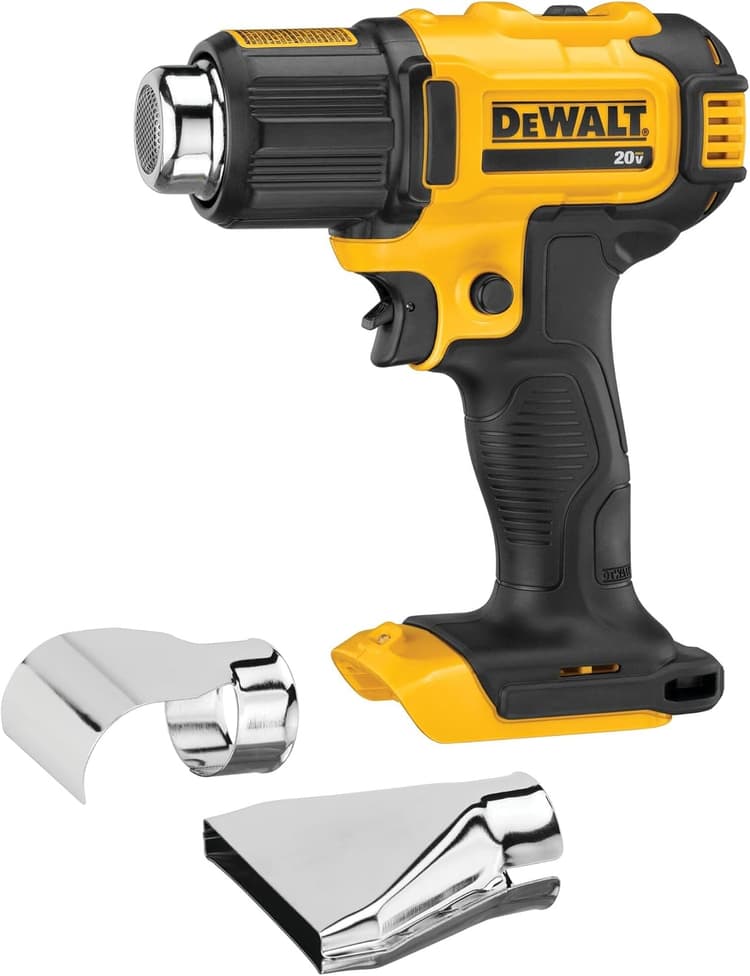
DEWALT DCE530B 20V MAX Cordless Heat Gun
Best cordless jobsite pick
A cordless option for punch-list work, shrink tubing, labels, stuck fasteners, and field repairs where an outlet is not convenient.
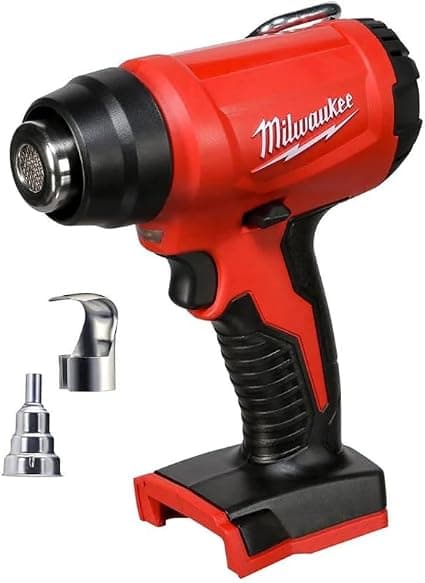
Milwaukee M18 Compact Heat Gun
Best cordless pick for Milwaukee users
A jobsite-focused cordless heat gun for electricians, maintenance techs, installers, and Milwaukee battery owners.
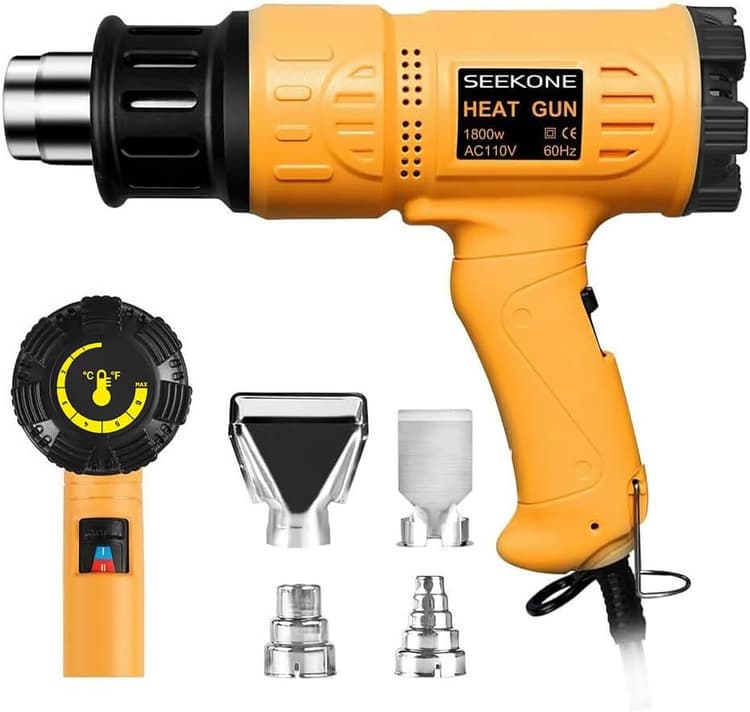
SEEKONE 1800W Variable Temperature Heat Gun
Best overall corded heat gun
A high-heat corded pick for paint softening, shrink tubing, PVC shaping, adhesive removal, and general workshop projects.
Quick answers
What should I compare before acting on "Corded vs Cordless Heat Guns: Which Is Better?"?
Compare the material, working area, temperature control, airflow, nozzle support, safety instructions, and whether a corded or cordless setup fits the job.
Should I buy from the article image alone?
No. Use the article to narrow the right type of heat gun, then open the review and retailer listing to confirm the current specs, accessories, seller details, and return policy.
What is the safest first step before using a heat gun?
Test on scrap material or a hidden area, start with the lowest effective heat, keep the nozzle moving, clear flammable items, and follow the manufacturer instructions.
Related Guides
Read Next
How to Choose a Heat Gun Without Burning the Project
A practical first-pass guide to temperature, airflow, nozzles, safety, and which style of heat gun fits the job.
Read articleBest Heat Gun for Beginners: What First-Time Buyers Should Know
A beginner-friendly guide to controls, stands, nozzles, and safety habits that make a first heat gun easier to use.
Read articleCorded vs Cordless Heat Guns: Which One Makes Sense?
Corded heat guns win for long heat sessions while cordless tools shine for short mobile repairs.
Read articleReferences
[1] Heat Gun Safety
Power Tool Institute
Visit source[3] Heat Guns, Torches and Accessories Selection
DigiKey TechForum
Visit source[4] Lead-Safe Renovations for DIYers
U.S. Environmental Protection Agency
Visit source[5] Fire Response: Hot Work Precautions
Occupational Safety and Health Administration
Visit source