
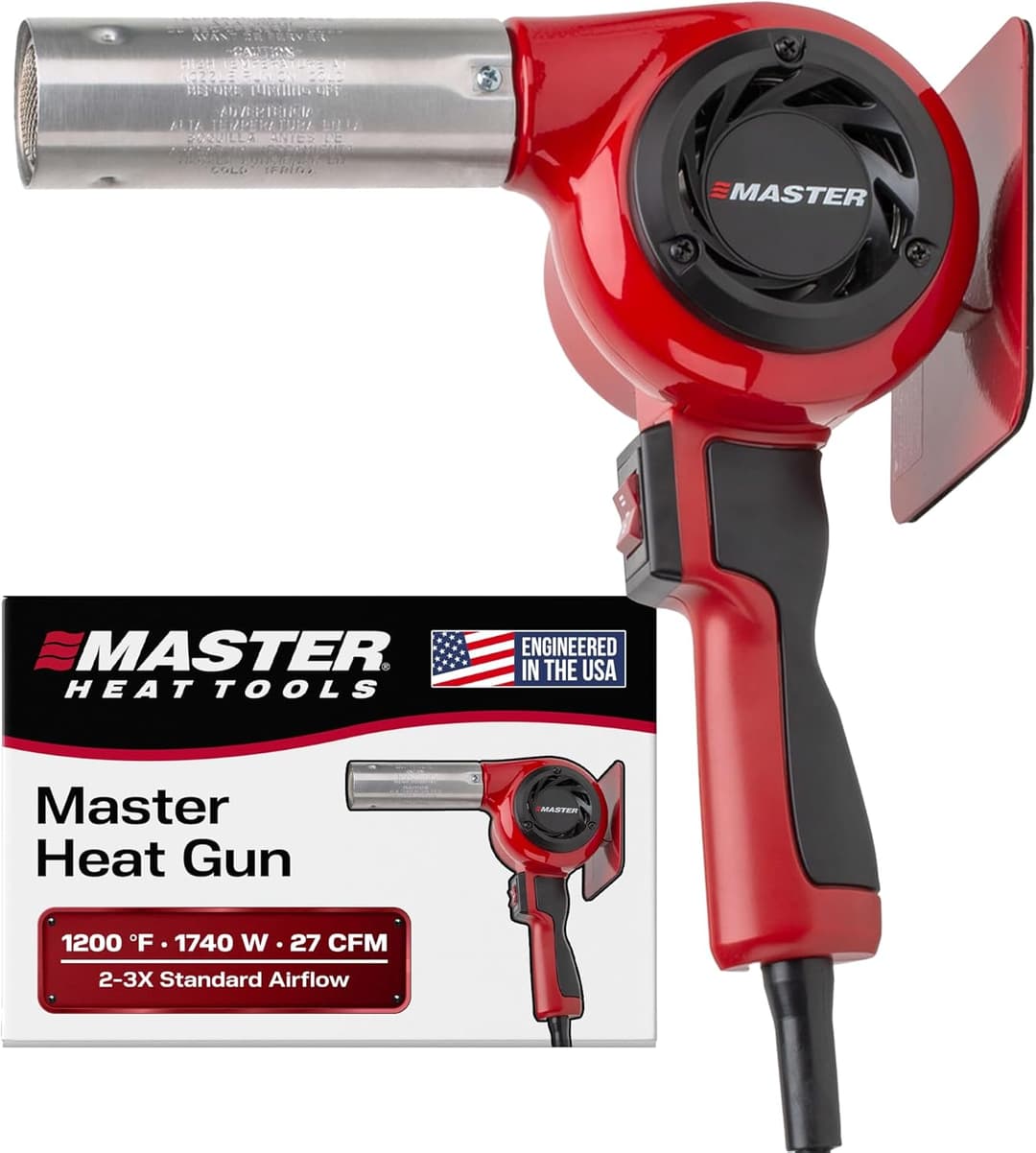
Buy this if
- You use a heat gun frequently in a shop or maintenance setting.
- Durability, serviceability, and sustained output matter more than lowest price.
- You want a tool that feels closer to professional equipment than a starter model.
Keep comparing if
- You only need a heat gun once or twice a year.
- You want a lightweight craft or drawer-sized option.
Who this heat gun is best for
This pick is best for shoppers looking for: best industrial-style heat gun. Compare the temperature range, airflow, power source, included nozzles, and safety instructions against the project before buying.
Setup tip: Confirm accessory compatibility and replacement-part availability before buying for shop use.
Key features
- Industrial-style housing
- High heat output
- Replacement parts on many models
- Broad nozzle accessory ecosystem
- Designed for shop use
Specs to verify
- Category
- Industrial
- Weight
- Heavy-duty corded class
- Capacity / note
- Professional shop use
Pros
- Built for frequent use
- Often repairable compared with disposable tools
- Good for shop and industrial workflows
Cons
- Higher cost
- Overkill for light household projects
Quick answers before you click buy
Who should buy the Master Appliance Master Heat Gun?
It is a fit for shoppers looking for best industrial-style heat gun, especially when the project matches industrial heat gun for frequent workshop use.
What should I verify before buying the Master Appliance Master Heat Gun?
Check the current temperature range, airflow, included accessories, warranty, return policy, seller details, and the manufacturer's safety instructions on the retailer page.
Is the Master Appliance Master Heat Gun safe for every heat gun project?
No heat gun is safe for every material or workspace. Use the lowest effective heat, keep the nozzle moving, ventilate when needed, and avoid flammable vapors, dust, paper, solvents, and unknown coatings.