
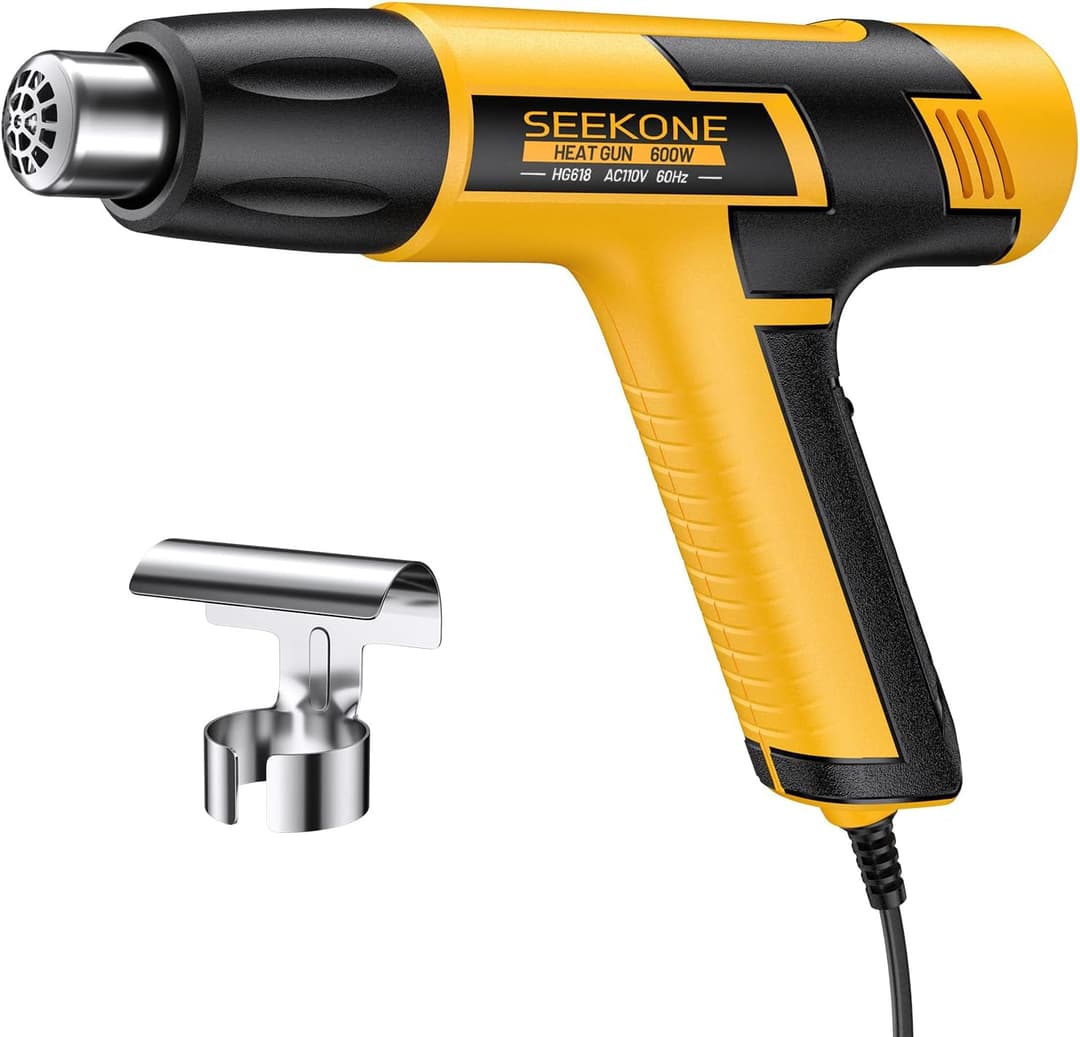
Buy this if
- You are working on embossing, resin bubbles, vinyl labels, light shrink tubing, or craft-table jobs.
- You want a smaller tool that is easier to aim at tiny surfaces.
- Storage space and simple handling matter more than maximum output.
Keep comparing if
- You need to strip paint, soften large adhesive areas, or shape larger plastic pieces.
- You want broad airflow, multiple nozzles, or workshop-level heat reserve.
Who this heat gun is best for
This pick is best for shoppers looking for: best compact heat gun for small parts. Compare the temperature range, airflow, power source, included nozzles, and safety instructions against the project before buying.
Setup tip: Protect the table surface and keep the nozzle moving; mini tools can still burn skin, paper, vinyl, and resin.
Key features
- Compact body
- Focused nozzle
- Low-profile storage
- Simple controls
- Good for short heat bursts
Specs to verify
- Category
- Mini Craft
- Weight
- Compact mini tool
- Capacity / note
- Small focused airflow
Pros
- Easy to handle on small work
- Less bulky than a full-size gun
- Affordable add-on for craft benches
Cons
- Not a substitute for full-size heat output
- Requires the same burn and fire caution as larger tools
Quick answers before you click buy
Who should buy the SEEKONE Mini Heat Gun?
It is a fit for shoppers looking for best compact heat gun for small parts, especially when the project matches mini heat gun for crafts and small parts.
What should I verify before buying the SEEKONE Mini Heat Gun?
Check the current temperature range, airflow, included accessories, warranty, return policy, seller details, and the manufacturer's safety instructions on the retailer page.
Is the SEEKONE Mini Heat Gun safe for every heat gun project?
No heat gun is safe for every material or workspace. Use the lowest effective heat, keep the nozzle moving, ventilate when needed, and avoid flammable vapors, dust, paper, solvents, and unknown coatings.