
Buying Guide · July 21, 2026
Best Heat Gun for DIY Projects: Choose by Control
Choose a DIY heat gun by temperature control, airflow, stability, and task—not maximum heat—and use it with a practical safety checklist.

Start here
The best heat gun for DIY projects is usually a corded, variable-temperature model with at least two airflow settings, a stable hands-free base, overheat protection, and task-appropriate nozzles. Maximum temperature is less important than being able to apply the minimum effective heat predictably.[1][3][4][5]
A heat gun can ignite materials, burn skin, damage surfaces, and release hazardous fumes. Read and follow the manual for your exact model. Keep suitable fire protection nearby, work with ventilation appropriate to the material, and do not use a heat gun as a substitute for training or required protective equipment.[1][3][4][5]
Match the tool to the work
— DIY task — Features that matter most — Common mistake — — Heat-shrink tubing — Low-temperature control, concentrator nozzle, stable airflow — Scorching insulation by holding still — — Removing stickers/adhesive — Low setting, broad/reflector nozzle, fine control — Heating glass or finished surfaces too aggressively — — Stripping paint — Variable heat, scraper compatibility, comfortable grip — Heating unknown/lead paint or creating fumes without controls — — Bending plastic — Repeatable temperature and airflow, hands-free base — Overheating one spot until it bubbles — — Crafts/embossing — Low airflow, low heat, compact body — Blowing powder or scorching paper — — Thawing permitted materials — Low controlled heat and task-specific approval — Using near combustible materials, pipes, or hidden wiring —[1][3][4][5]
If one tool must cover several tasks, prioritize a wide usable control range and stable handling over a high headline wattage.[1][3][4][5]
The features worth paying for
Variable temperature control.[1][3][4][5]
A dial or digital control helps you begin low and increase gradually. Fixed high/low models can handle simple jobs, but wide differences between settings make delicate materials harder to protect.[1][3][4][5]
More than one airflow setting.[1][3][4][5]
Temperature and airflow work together. Lower airflow can keep light craft material in place; higher airflow can distribute heat across a larger surface. More airflow is not automatically more effective.[1][3][4][5]
Stable hands-free operation.[1][3][4][5]
A flat rear housing or integrated stand allows some models to point upward while you move the workpiece with tools. Use this only as the manufacturer permits, on a noncombustible stable surface, with the hot nozzle protected from contact.[1][3][4][5]
Thermal protection and cool-down behavior.[1][3][4][5]
Overheat protection is useful, but it does not make misuse safe. Follow the manual's cool-down and storage directions. A nozzle can remain hot after the fan stops.[1][3][4][5]
Useful nozzles, not a large accessory count.[1][3][4][5]
A concentrator directs heat into a small area; a reflector can wrap heat around tubing; a wide nozzle spreads heat. The best kit contains accessories rated for that model and the tasks you actually perform.[1][3][4][5]
Corded or cordless?
Choose corded for long bench sessions, consistent heat, and no battery-runtime planning. Choose cordless when access and mobility matter more than sustained output. A cordless heat gun can still create the same burn and fire hazards; the absence of a cord does not make it a casual tool.[1][3][4][5]
For most home workshops, a corded variable-temperature model is the better general-purpose value. The planned corded vs. cordless heat-gun guide will compare the tradeoffs in depth.[1][3][4][5]
A safe first-use walkthrough
1. Identify the material. Do not heat an unknown coating, plastic, sealed container, pressurized item, or material that may release hazardous fumes. 2. Clear the work zone. Remove paper, solvents, dust, fuel, aerosols, and other combustibles. Account for heat traveling behind or through the workpiece. 3. Ventilate for the task. General airflow is not a substitute for material-specific exposure controls or respiratory protection. Never combine a heat gun with chemical strippers unless the manufacturer explicitly permits it. 4. Inspect the tool. Check the cord/battery, plug, housing, air inlets, nozzle, and accessory fit. Do not use a damaged tool. 5. Secure the work. Keep both hands and the hot-air path controlled. Use heat-resistant clamps or tools where appropriate. 6. Start low and keep moving. Hold the nozzle at the distance recommended by the tool/material instructions. Test on scrap. 7. Watch the whole heat path. The surface, backing, fasteners, hidden cavity, and nearby objects may all heat differently. 8. Cool and store correctly. Set the tool on its approved stand, prevent contact with the nozzle, unplug/remove the battery as directed, and store only after cooling.[1][3][4][5]
The DeWalt D26950/D26960 manual, for example, warns users not to combine the heat gun with chemical strippers and to read all safety instructions. Always use the manual for the exact model you own; controls and allowed uses differ.[1][3][4][5]
Paint-removal warning
Heating paint can produce hazardous fumes and dust, particularly when old coatings may contain lead. Do not guess from appearance. Follow current EPA lead-safe guidance for pre-1978 housing and applicable workplace rules. Keep children and pregnant people away from lead renovation work, and use a qualified professional when the hazard or required controls are outside your competence.[1][3][4][5]
Buying checklist
• [ ] Variable temperature control suited to my lowest-temperature task • [ ] At least two usable airflow levels • [ ] Stable approved rest/hands-free position • [ ] Clear manual and available replacement accessories • [ ] Nozzles rated for this exact model • [ ] Comfortable grip and controls I can change without losing control • [ ] Overheat protection and explicit cool-down instructions • [ ] Cord/battery setup appropriate to the work area • [ ] Warranty and manufacturer support[1][3][4][5]
Review BestHeatGuns' safety disclaimer, review methodology, and resources before comparing models. The planned heat-gun safety walkthrough is the next read for first-time users.[1][3][4][5]
Frequently asked questions
How many watts should a DIY heat gun have?.[1][3][4][5]
Wattage alone does not predict usable control. Compare the temperature range, airflow, duty cycle, and task guidance. Choose enough capacity for the job without sacrificing a controllable low setting.[1][3][4][5]
Can I use a hair dryer instead?.[1][3][4][5]
A hair dryer may handle gentle warming for some low-temperature tasks, but it is not equivalent to a heat gun. Do not force either appliance into a use its manufacturer does not permit.[1][3][4][5]
Can a heat gun start a fire without a visible flame?.[1][3][4][5]
Yes. Hot air and the nozzle can ignite or overheat combustible material, including material outside your direct view. Maintain a cleared work area and monitor it after heating.[1][3][4][5]
Original asset brief
Asset: “Choose a DIY Heat Gun by Task” landscape decision matrix, 1600×1000 px. Columns: task, control priority, airflow, recommended nozzle type, principal hazard check. Add a prominent footer: “Start low. Keep moving. Know the material.” Alt text: “Heat-gun selection matrix comparing controls and hazards for six common DIY tasks.”[1][3][4][5]
Recommended Next Step
Compare heat guns that fit this topic.
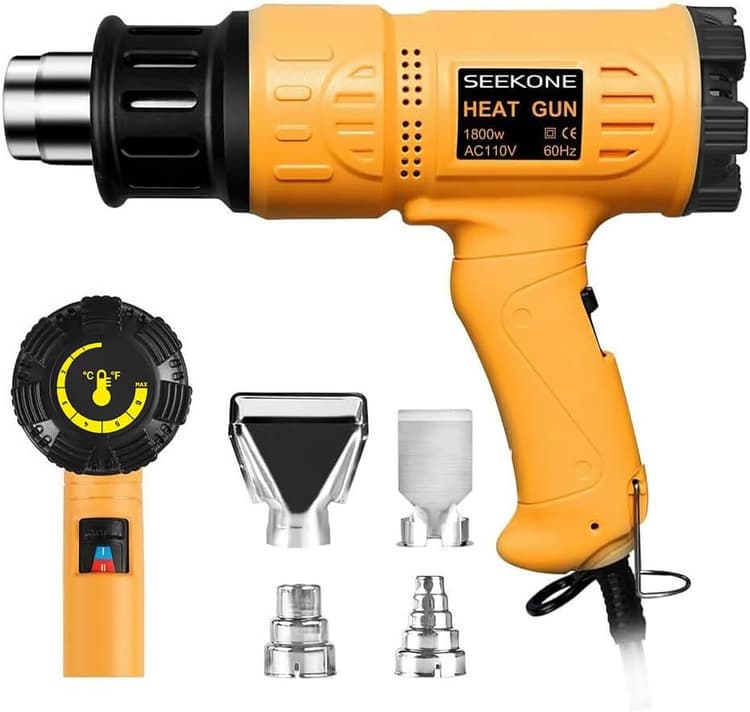
SEEKONE 1800W Variable Temperature Heat Gun
Best overall corded heat gun
A high-heat corded pick for paint softening, shrink tubing, PVC shaping, adhesive removal, and general workshop projects.
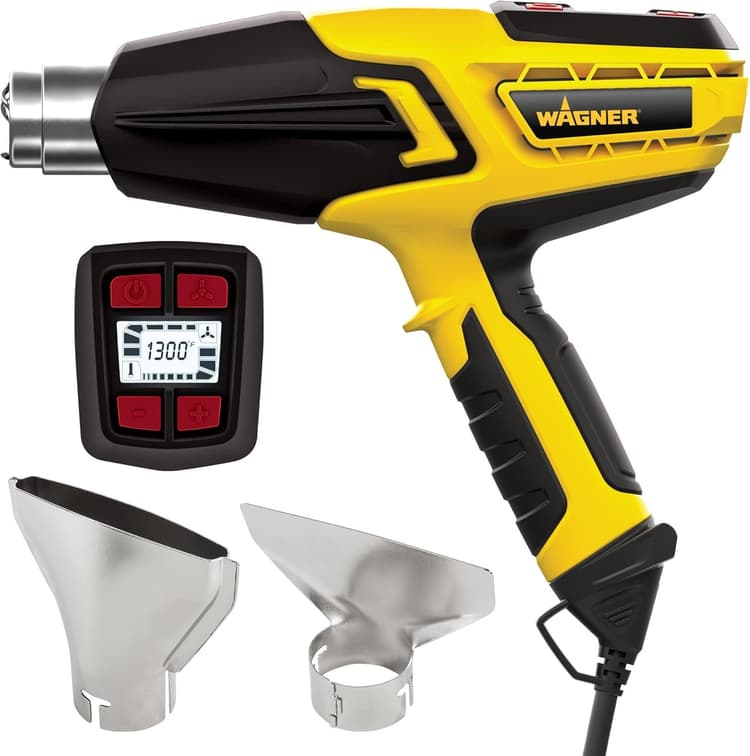
Wagner Furno 700 Heat Gun
Best digital temperature control
A premium DIY heat gun with digital settings for shoppers who want repeatable heat control for paint, film, and refinishing projects.
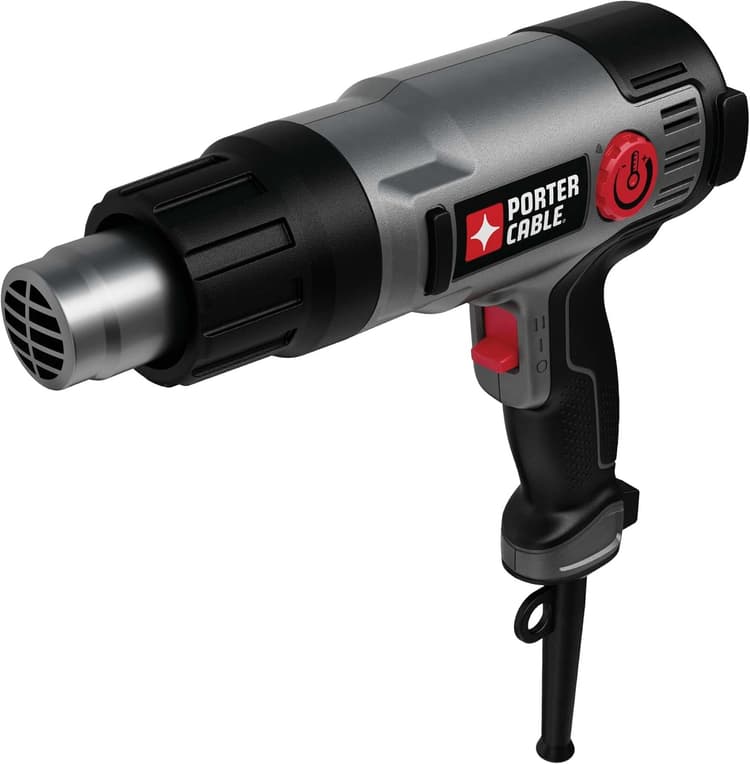
PORTER-CABLE PC1500HG Heat Gun
Best home repair workhorse
A proven-style corded heat gun for paint softening, adhesive removal, decals, thawing, and general garage projects.
Quick answers
What should I compare before acting on "Best Heat Gun for DIY Projects: Choose by Control"?
Compare the material, working area, temperature control, airflow, nozzle support, safety instructions, and whether a corded or cordless setup fits the job.
Should I buy from the article image alone?
No. Use the article to narrow the right type of heat gun, then open the review and retailer listing to confirm the current specs, accessories, seller details, and return policy.
What is the safest first step before using a heat gun?
Test on scrap material or a hidden area, start with the lowest effective heat, keep the nozzle moving, clear flammable items, and follow the manufacturer instructions.
Related Guides
Read Next
How to Choose a Heat Gun Without Burning the Project
A practical first-pass guide to temperature, airflow, nozzles, safety, and which style of heat gun fits the job.
Read articleBest Heat Gun for Beginners: What First-Time Buyers Should Know
A beginner-friendly guide to controls, stands, nozzles, and safety habits that make a first heat gun easier to use.
Read articleHow Much Wattage Does a Heat Gun Need?
Wattage affects heat recovery and output, but control, airflow, and job type still matter.
Read articleReferences
[1] Heat Gun Safety
Power Tool Institute
Visit source[3] Heat Guns, Torches and Accessories Selection
DigiKey TechForum
Visit source[4] Lead-Safe Renovations for DIYers
U.S. Environmental Protection Agency
Visit source[5] Fire Response: Hot Work Precautions
Occupational Safety and Health Administration
Visit source